
What is Sensory Processing Disorder and How Can OT Help?
The quick version
- Sensory processing disorder (SPD) affects how the brain handles everyday sensory input. It’s not a formal diagnosis in Australia, but the challenges are real, widely recognised, and treatable.
- Children with sensory processing difficulties may resist certain textures, become distressed by noise, or actively seek intense input like spinning and crashing. Adults experience it too, often mistaking sensory processing issues for anxiety or personality traits.
- SPD commonly overlaps with autism and ADHD, but it can also exist on its own.
- Occupational therapy is the primary support, using sensory integration therapy, sensory diets, and environmental changes. NDIS participants can access it under Capacity Building (Improved Daily Living).
- St Jude’s provides NDIS-funded OT across WA and QLD. Call (08) 9279 4343 (WA) or (07) 2800 6050 (QLD).
Your child screams when you switch on the hand dryer. They refuse to wear anything but the same soft t-shirt. Haircuts feel like a battle. Or maybe it’s the other way around — they barely react when they scrape their knee, seek out spinning until they’re dizzy, or crash into furniture like they can’t quite feel where their body ends.
These experiences can be confusing, whether you’re a parent trying to make sense of your child’s behaviour or an adult who’s always felt overwhelmed without knowing why. If you’ve been searching ‘what is sensory processing disorder?’, you’re in the right place. We’ll walk you through what it is, the signs at different ages, how it connects to autism and ADHD, and how occupational therapy can help.
What is sensory processing disorder?
Sensory processing disorder (SPD) is a neurological condition where the brain has difficulty receiving, organising, and responding to information from the senses. Everyday sensations most people barely notice (a clothing tag, the hum of fluorescent lighting, a crowded shopping centre) can feel overwhelming, confusing, or sometimes barely register at all.
You’re probably familiar with five senses: sight, hearing, touch, taste, and smell. But your body actually relies on eight sensory systems, and the three you might not have heard of matter just as much. Your vestibular system (in the inner ear) handles balance and movement. Proprioception tells you where your body is in space, which is why some people bump into doorframes or grip a pencil too hard. And interoception is your awareness of internal signals like hunger, temperature, and needing the toilet. When any of these systems aren’t processing well, it shows up in daily life.
SPD generally shows up in three patterns: over-responsive (reacting intensely to stimulation others find manageable), under-responsive (missing or slow to register input), and sensory seeking (actively craving intense sensory experiences like spinning, crashing, or deep pressure). Most people experience a mix of these patterns, and responses to sensory input can shift with the environment and stress level.
Sensory processing disorder is not currently recognised as a standalone diagnosis in the DSM-5 or ICD-11, and in Australia, clinicians tend to use the term ‘sensory processing difficulties.’ But the challenges are very real, the evidence base is growing, and research suggests they affect up to one in six children, with estimates of 5% to 16% of the general population affected.
That’s the short answer to what is sensory processing disorder. Here’s what it looks like in practice.
Signs of sensory processing difficulties in children

If you’re a parent or carer, these are the kinds of things you might notice first.
Over-responsive children might:
- Becoming distressed by clothing tags, seams, or certain fabrics
- Covering their ears or becoming upset in noisy places like shopping centres or assemblies
- Avoiding messy play like finger painting or sandpits
- Gagging or refusing foods based on texture rather than taste
Under-responsive children might:
- Not seeming to feel pain after falls or scrapes
- Appearing not to hear when spoken to directly
- Having delayed responses to their name being called
- Struggling to recognise when they’re hungry, thirsty, or need the toilet
Sensory-seeking children might:
- Constantly touching people and objects
- Craving spinning, swinging, or jumping
- Deliberately crashing into things or seeking rough play
- Chewing on non-food items like shirt collars or pencils
A lot of children show a mix of these patterns, which is what makes sensory processing challenges hard to pin down without professional assessment. Your child might be hypersensitive to noise but constantly seeking deep pressure. That’s not contradictory; it’s how sensory processing works.
Signs of sensory processing difficulties in adults

Sensory processing disorder doesn’t end at childhood. Many adults have lived with sensory difficulties their whole lives without anyone picking up on them. Over time, you develop workarounds: avoiding certain places, wearing only specific clothing, building rigid routines. They can work, but they’re exhausting.
In adults, sensory processing challenges might look like:
- Avoiding restaurants, bars, or shopping centres because of noise, lighting, or crowds
- Struggling to concentrate in open-plan offices due to background noise or visual clutter
- Feeling overwhelmed or ‘shutting down’ in busy social environments
- Not recognising internal signals like hunger, dehydration, or fatigue until they become severe
These experiences are often mistaken for personality traits: being ‘fussy,’ ‘antisocial,’ or ‘too sensitive.’
If any of this sounds familiar, you’re not imagining it. Many adults first read about sensory processing disorder after years of assuming they were just wired differently. An OT can help you understand your sensory profile and build strategies that work.
How sensory processing disorder relates to autism and ADHD
Once families understand what sensory processing disorder is, the next question is usually about autism and ADHD. There’s real overlap, but they’re not the same thing.
Sensory processing differences are a recognised part of the diagnostic criteria for autism. The DSM-5 lists ‘hyper- or hypo-reactivity to sensory input’ as a feature of Autism Spectrum Disorder, and research published in 2026 found that up to 97% of autistic people experience sensory differences. With 290,900 Australians having an autism diagnosis in 2022 and about one in five Australians living with a disability, the demand for sensory-focused OT keeps growing.
For ADHD, sensory challenges are common but not part of the formal criteria. The distractibility that comes with ADHD can look like sensory-seeking behaviour, which is one reason the two get confused. A 2025 Australian study found that sensory screening actually helped clinicians tell them apart in children aged 6 to 13.
Here’s what matters most: sensory processing disorder can exist on its own. It can also co-occur with autism, ADHD, or both. That’s why a thorough, multidisciplinary assessment matters.
How occupational therapy supports people with sensory processing challenges
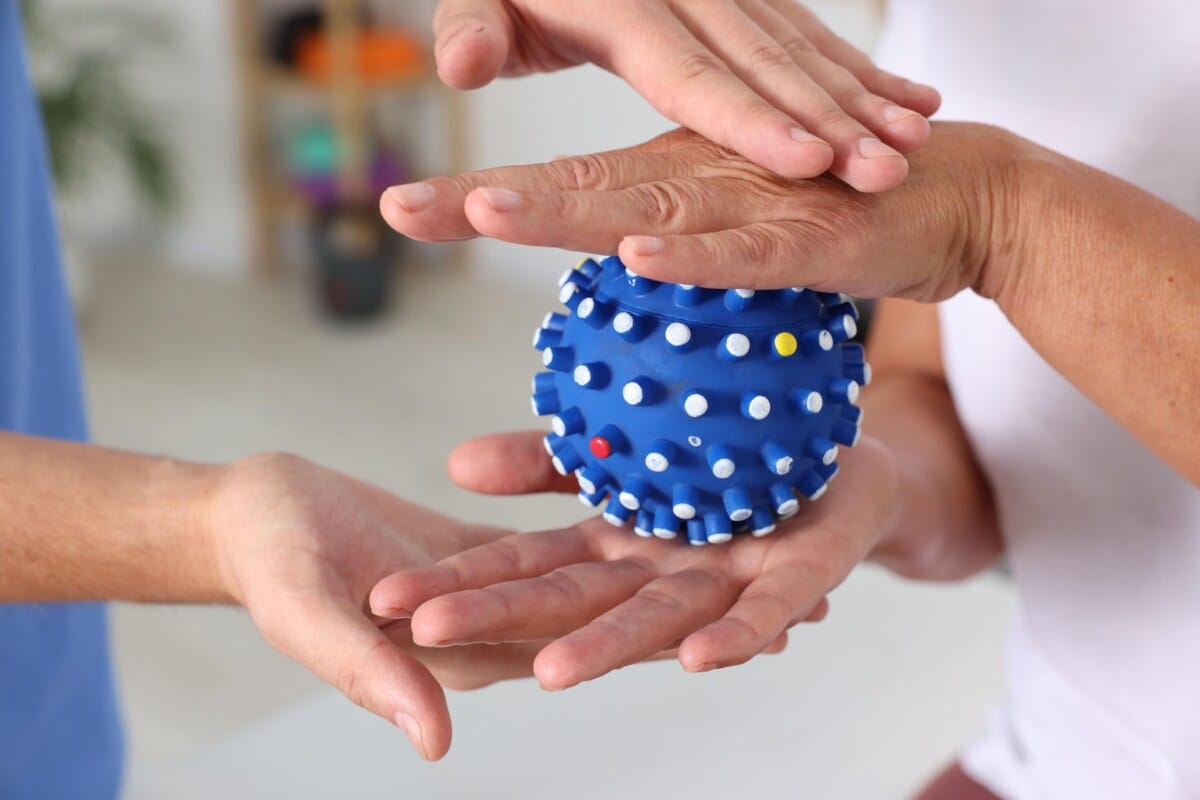
If you’re wondering where to start, occupational therapy is usually the answer. OTs assess how you process sensory information, work out where it’s getting in the way, and build a practical plan. Not sure how OT compares to other therapies? This guide explains the difference between OT and physiotherapy.
Ayres Sensory Integration therapy
Ayres Sensory Integration (ASI) is the most researched sensory-focused OT approach. Developed in the 1970s, it uses play-based activities in a sensory-rich environment (swings, climbing equipment, textured materials) where the person directs the play and the therapist adjusts the challenge in real time.
A 2025 review led by the University of Queensland found that ASI makes a real difference for autistic children working toward personalised goals around function and participation. A 2026 trial found it helped children with ADHD too, particularly with attention and emotional regulation. Some reviews have found less consistent results for reducing specific behaviours, but the evidence is strongest for personalised, functional goals, which is exactly how NDIS plans are structured.
Sensory diets
A sensory diet has nothing to do with food. It’s a structured programme of sensory-motor activities built into daily life to support regulation. An OT designs it around the individual’s profile, and it might include heavy work (carrying, pushing), deep pressure (weighted blankets, compression clothing), vestibular input (swinging, bouncing), or calming strategies (dimmed lighting, slow movement).
Environmental modifications and daily strategies
OTs also help you reshape the environments where you live, learn, and work:
- At home: creating a quiet space for regulation; adjusting lighting; providing movement equipment like a mini trampoline
- At school: scheduling movement breaks; offering alternative seating like wobble cushions; allowing noise-cancelling headphones
- In the workplace: requesting a quiet desk, adjustable lighting, or flexible workspace setup
For adults, these modifications can be life-changing, especially when sensory overload has been chalked up to anxiety or personality for years. OTs also adapt everyday routines (dressing, mealtimes, hygiene) to fit around sensory needs, and coach parents and carers on strategies between sessions. The real progress happens in daily life.
Accessing OT for sensory processing through the NDIS
If you’re an NDIS participant, occupational therapy for sensory processing is funded under Capacity Building (Improved Daily Living). No GP referral is required, though clear goals and supporting evidence help.
Sensory processing disorder on its own doesn’t qualify you for the NDIS. Access requires a recognised permanent disability, such as autism, intellectual disability, or psychosocial disability. But once you’re in, sensory-focused OT can be included when sensory challenges are linked to your disability.
Since 1 July 2025, allied health can no longer be funded from Core Supports. All OT, including sensory processing intervention, must come from your Capacity Building budget. A support coordinator can help you work it out.
How we can help
That’s where we come in. Here at St Jude’s, we’re an NDIS-registered disability and aged care provider that’s been supporting people across Western Australia and Queensland for over 40 years. We don’t provide NDIS funding; that comes from the NDIA. What we provide is the services and coordination that help you use your funding well.
If sensory processing is a concern, whether for your child, yourself, or someone you care for, our allied health team includes occupational therapists who assess sensory profiles, develop therapy plans, and equip families with practical strategies. We offer paediatric therapies across Queensland and in Perth, and our support coordinators can help you make sense of your NDIS plan if you’re unsure where to begin.
Call us in WA on (08) 9279 4343, or in QLD on (07) 2800 6050. You can also get in touch online.
You don’t need to have everything figured out before you reach out.
Frequently Asked Questions
Not at this stage. SPD isn’t listed in the DSM-5 or ICD-11, and in Australia it’s more commonly called ‘sensory processing difficulties.’ That said, OTs and other health professionals recognise it, the evidence for treatment keeps growing, and the challenges are very much real.
Yes. While it’s most often picked up in childhood, plenty of adults live with sensory processing difficulties that were never identified. An occupational therapist can assess how you process sensory information and help you develop practical strategies for daily life.
Sensory processing differences are part of the diagnostic criteria for autism, and most autistic people experience them. But SPD can also exist on its own. Autism involves broader differences in social communication alongside restricted or repetitive behaviours, while SPD specifically describes how sensory information is processed.
Yes, with a caveat. Sensory processing disorder on its own doesn’t qualify someone for the NDIS. You need a recognised permanent disability. But once you’re a participant, OT for sensory processing can be funded through Capacity Building (Improved Daily Living), as long as it’s linked to your disability and plan goals.
Your OT will start with a clinical interview and standardised tools like the Sensory Profile 2 to understand how you or your child responds to sensory input. They’ll look at how challenges show up in daily life, then put together a plan that might include therapy sessions, a sensory diet, environmental modifications, and coaching for parents or carers.